top of page
.png)
.png)

Charles Rennie Mackintosh
Charles Rennie Mackintosh (1868–1928) was a Scottish architect and designer, the leading figure of Art Nouveau in the United Kingdom and creator of the Glasgow Style. He uniquely fused Art Nouveau, Arts & Crafts, Japanese minimalism, and traditional Scottish architecture to create a distinctive style characterized by asymmetrical sculptural forms, geometric rectilinear lines with subtle curves, and abstracted natural motifs like the Glasgow rose, birds, and willow trees. Mackintosh is famous for his iconic high-back chairs reaching up to 141 cm in height, such as the Argyle (1898), Willow (1904), and Hill House 1 (1902), along with luminous modern interiors stripped of excessive Victorian detail. His major architectural works include the Glasgow School of Art (1896–1909), the first original Art Nouveau architecture in Great Britain; Hill House in Helensburgh (1902), where Picasso visited him; and the Willow Tea Rooms (1903–1904). After achieving international reputation in the 1890s and exhibiting at Vienna's 8th Secessionist Exhibition in 1900 with his wife Margaret Macdonald, Mackintosh was almost forgotten after 1914 until a 1970s revival when Cassina began reproducing his furniture, which continues to be produced today for its stripped simplicity that appeals to modern contemporary taste, earning him recognition as one of the most important British architects of the last 150 years.
"There is hope in honest error; none in the icy perfections of the mere stylist."
Charles Rennie Mackintosh
Gallery


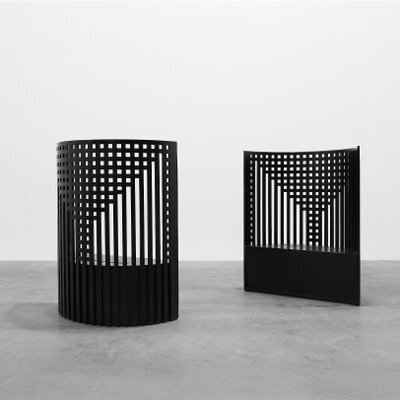
designer's products

Hill House 1 Chair
Cassina
Premium

Willow 1
Cassina
Premium

bottom of page